
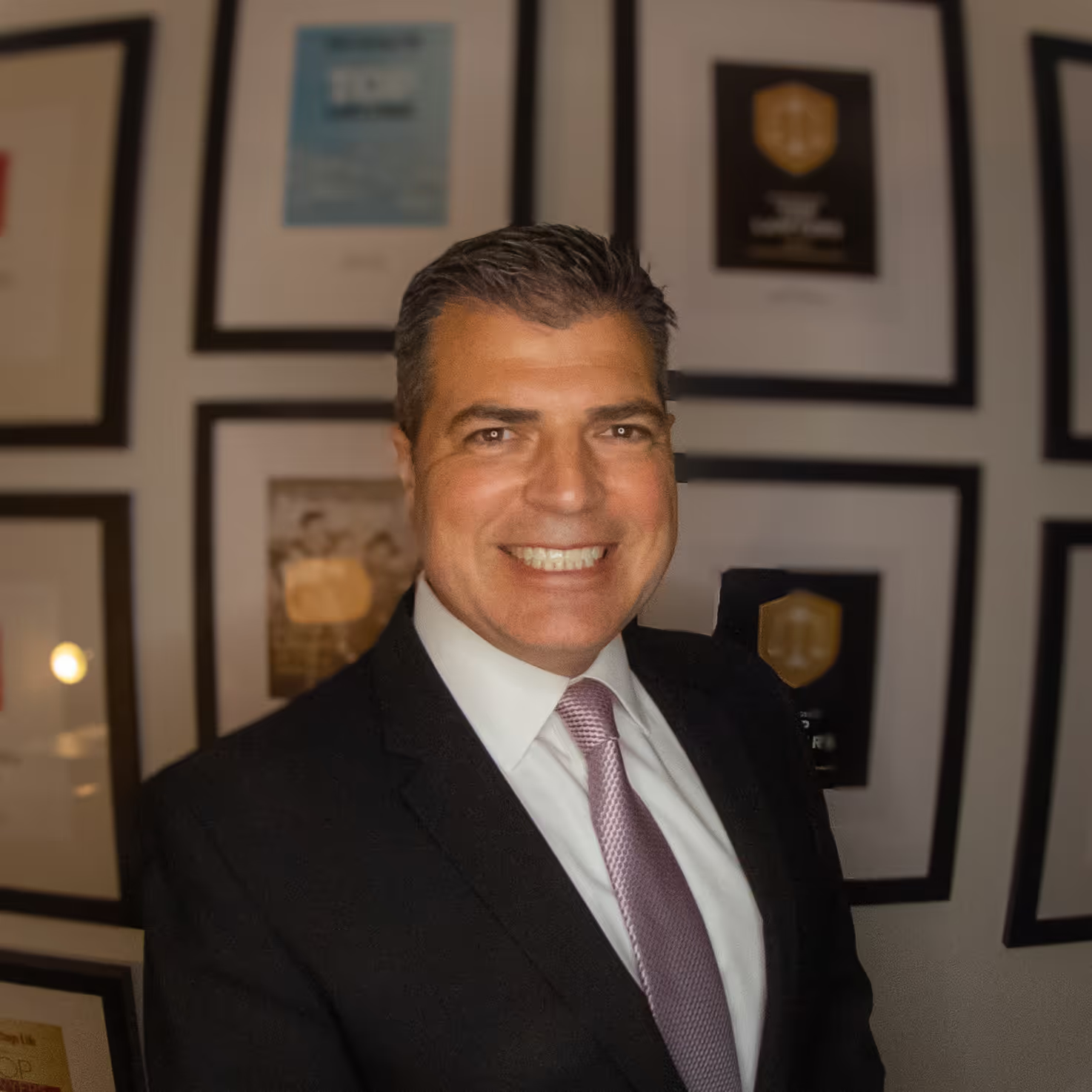
Joshua Mulligan is the most highly-credentialed attorney defending criminal cases in the Coachella Valley. Josh was educated at the top-tier Ivy League Cornell Law School, where he worked on the Journal of Law and Public Policy, and his widely-cited student note was published. Josh has worked exclusively in criminal defense since graduating in 2004 and, through hard work, has obtained thousands of pre-trial case dismissals and dozens of “not guilty” verdicts at jury trial. Josh is recognized as a California State Bar Board Certified Criminal Law Specialist, a title that less than 3% of California attorneys hold. Josh is also a graduate of Gerry Spence’s Trial Lawyers College, a demanding program involving psychodrama, acting, and storytelling training.
Looking for the best restraining order defense attorney? Has your life been thrown into chaos by accusations and legal maneuvering? The Mulligan Defense understands that a restraining order isn't just a piece of paper; it's a weapon that can dismantle your life, sever your connections, and strip away your freedom. The Mulligan Defense does not back down from a fight and does not allow clients to be treated as another case file. Here, your truth is the battle cry.
Warriors, Not Just Lawyers: Attorney Mulligan does not simply defend; Attorney Mulligan goes to battle. Attorney Joshua Mulligan has seen the darkest corners of the justice system, from simple misunderstandings to the most complex and frightening accusations. Attorney Mulligan stands unyielding for the client’s cause.
Local Expertise, Unmatched Advantage: Since 2007, Attorney Mulligan has been a constant presence at the Larson Justice Center in Indio. Attorney Mulligan is not a stranger to these halls and has built trust with the judges who decide these cases. This provides the ability to navigate restraining order cases where it matters most—in the heart of the courtroom.
Comprehensive Representation: The Mulligan Defense handles both criminal cases and restraining orders, ensuring that client rights are protected on all fronts. These interconnected legal challenges demand a unified strategy, and The Mulligan Defense is prepared to provide comprehensive legal protection.
A Record of Success: With over 20 years of experience, Attorney Mulligan knows what it takes to win. The record includes hundreds of pre-trial dismissals, dozens of restraining order victories, and dozens of jury trial acquittals.
Your Story, the Weapon: Attorney Joshua Mulligan’s training at Trial Lawyers College allows him to transform a client’s story into a powerful legal argument that moves people, including judges and juries. Attorney Mulligan crafts a compelling narrative that goes beyond dry facts, because when a story connects, it demands justice.
Restraining orders, also called protective orders, are court orders designed to prevent harassment or abuse. There are several types of restraining orders, including:
Domestic Violence Restraining Orders: These are for situations where the restrained person and the protected party have an intimate relationship or are blood relatives.
Civil Harassment Restraining Orders: These are designed to protect someone from harassment, stalking, threats, or physical violence by an individual they do not have a close relationship with, such as a neighbor, coworker, or stranger. These orders can prohibit contact, require the harasser to stay away from the protected party, and prevent further harassment. This type of restraining order is used when the relationship does not qualify under domestic violence laws.
Workplace Violence Restraining Orders: These are intended to protect employees from violence or threats of violence in the workplace. Employers can seek these orders on behalf of employees to ensure a safe working environment.
Avoiding service may seem like a clever strategy, but it is not a solution. While personal service is the standard requirement, courts have ways to work around intentional evasion. Petitioners can request alternate methods such as service by mail, email, or publication.
The better approach is facing the situation directly. By appearing in court and presenting a defense, allegations can be challenged and rights protected. Working with an experienced restraining order lawyer ensures preparedness. Hiding delays the inevitable and places the restrained party at a disadvantage once the matter reaches the court.
A temporary restraining order (TRO) is a court order designed to provide immediate protection to someone claiming danger. TROs are often granted without the accused being present. A TRO can limit movement, contact, and even access to one’s own home. It is not permanent. A hearing follows where both sides present evidence and the judge determines whether a longer-term order will issue. Until that hearing, strict compliance with the TRO is critical.
For a domestic violence restraining order (DVRO), abuse extends beyond physical harm. California law defines abuse broadly and includes behaviors that harm, threaten, or harass someone in a close relationship.
Physical Abuse: Acts such as hitting, pushing, slapping, choking, or throwing objects.
Threats of Harm: Threatening harm to a person, children, or pets.
Harassment: Persistent and unwanted behavior intended to intimidate, annoy, or disturb.
Stalking: Following, monitoring movements, or using technology to track location or communications.
Disturbing the Peace: Actions that destroy mental or emotional calm, including isolation, property destruction, or controlling behavior.
Yes. Courts recognize that restraining order cases move quickly. Requests for continuances must be made promptly and supported by an explanation of why additional time is needed. Temporary restraining orders typically remain in effect until the new hearing date. DV-115 is used to request a continuance.
Evidence may include text messages, emails, voicemails, photographs, police reports, medical records, and live witness testimony. Witnesses must appear in court. Inconsistencies in the petitioner’s story should be highlighted to present a clear picture of the truth.
Yes. A restraining order can be sought if abuse occurred. Mutual restraining orders require evidence and are not issued lightly. Preparation is essential, including documentation, witness statements, and effective legal presentation. The court decides based on testimony and evidence.
A permanent restraining order follows a hearing and can last one to three years, sometimes longer under specific circumstances. While termed “permanent,” it is often time-limited and may be renewed or modified.
Yes. Coercive control includes patterns of psychological and emotional abuse intended to dominate and isolate another person (Family Code section 6320(c)).
Types include isolation, manipulation and gaslighting, economic control, surveillance, threats, deprivation of basic needs, and rigid rules with punishments.
Restraining orders can include:
Personal conduct orders
Stay-away orders
Move-out orders
Loss of child custody
A restraining order can result in loss of freedom, supervised visitation, firearm surrender, mandatory classes, criminal charges for violations, immigration consequences, and permanent public records.
Violations may result in arrest, jail time, fines, loss of custody, and employment consequences. Compliance is critical.
Emergency Protective Orders: up to 7 days
Temporary Restraining Orders: until hearing (usually within 21 days)
Domestic Violence Restraining Orders: up to 5 years
Civil Harassment Restraining Orders: up to 3 years
Duration is determined by the court.
Attorney Mulligan understands that restraining orders may be based on false accusations or misunderstandings. Whether facing an allegation or seeking protection, Attorney Mulligan will gather evidence, present a strong defense, and protect client rights throughout the legal process.



Joshua Mulligan is a State Bar Certified Criminal Law Specialist, a distinction achieved by less than 3% of criminal defense attorneys. He’s a graduate of Cornell Law School, an Ivy League institution, as well as Trial Lawyers College which includes a four week program of intensive study and practice in trial storytelling and effective advocacy.
Tell us Your story today