
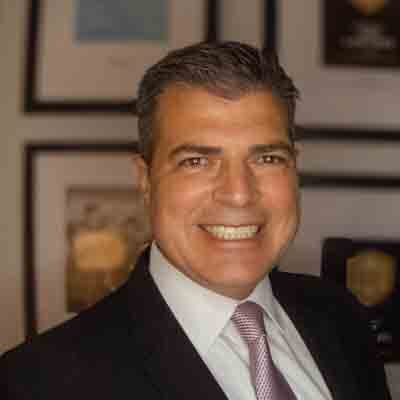
Joshua Mulligan brings rare credentials and real trial experience to drug defense in the Coachella Valley. Educated at Cornell Law School, where he worked on the Journal of Law and Public Policy and published a widely cited student note, Josh has devoted his career exclusively to criminal defense since 2004. He has earned hundreds of dismissals and dozens of not guilty verdicts at jury trial. Josh is a State Bar Certified Criminal Law Specialist, a distinction achieved by only a small percentage of California lawyers handling criminal cases, and he is also a graduate of Trial Lawyers College, a demanding program centered on psychodrama, acting, storytelling, and persuasive courtroom advocacy. Drug cases are rarely simple. They often involve search issues, informants, questionable police assumptions, laboratory evidence, and prosecutors trying to turn a bad moment into a life-defining label. Josh knows how to attack those cases from every angle and how to fight for clients charged with drug possession, possession for sale, transportation, and related narcotics offenses.
Drug charges in Riverside County move fast and hit hard. A traffic stop on I-10. A probation search. An undercover buy at a festival. A phone they shouldn't have searched. One moment you're living your life, and the next you're staring at charges that threaten your freedom, your job, your family, and everything you've built.
The Mulligan Defense handles drug cases — possession, possession for sale, sales, transportation, manufacturing, and everything in between — throughout the Coachella Valley and at the Larson Justice Center in Indio. Attorney Joshua Mulligan is a California State Bar Certified Criminal Law Specialist, a distinction held by fewer than 3% of California criminal defense attorneys. Criminal defense is the only thing this firm does.
You don't need a criminal lawyer who dabbles. You need one who's been doing this — and only this — for over 20 years.
When your freedom, record, and reputation are on the line, you want the best. Clients across the Coachella Valley turn to The Mulligan Defense for drug cases.
If you're reading this page because you or someone you care about just got arrested for a narcotics offense, here's what matters in the next 24–48 hours:
Do not talk to police about the case. You have a constitutional right to remain silent. Use it. Anything you say — in the car, in the holding cell, on a recorded jail call — can and will be used against you.
Do not consent to searches. If police ask to search your phone, your car, your home, or your person — say no. Politely and clearly. They may search anyway, but your refusal preserves your rights for later court challenges.
Save everything. Court paperwork, citation numbers, the names of officers, and anything you remember about the stop or arrest. Write it down while it's fresh.
Do not miss court. If you have a court date, be there. A missed court date turns a manageable case into a warrant and a bail problem.
Call a defense attorney before you do anything else. The earlier an attorney gets involved, the more options are usually available.
California's Health and Safety Code draws sharp lines between different drug offenses. The difference between a misdemeanor you can divert out of and a felony that carries prison time often comes down to a few grams, a text message, or how the police wrote their report.
Simple possession means having a controlled substance for personal use. Under Proposition 47, most simple possession charges are now misdemeanors. The prosecution must prove you knew the substance was present, knew what it was, and possessed a usable quantity.
Possession for sale is typically charged as a felony. Prosecutors often rely on circumstantial evidence such as quantity, packaging, cash, scales, multiple phones, or text messages. No actual sale needs to occur.
Selling, transporting, furnishing, or giving away a controlled substance is a felony carrying significant penalties under California law.
Manufacturing, compounding, converting, or processing controlled substances is treated as a serious felony and often involves additional allegations involving hazardous materials or environmental risks.
Methamphetamine charges remain among the most frequently prosecuted drug crimes in Riverside County.
Fentanyl cases have become a top prosecution priority statewide, and enforcement has been particularly aggressive in Riverside County. Local prosecutors and law enforcement agencies have repeatedly stated that fentanyl distribution is one of their highest priorities because of the dramatic rise in overdose deaths.
Riverside County District Attorney Mike Hestrin has publicly emphasized the office’s commitment to aggressively prosecuting fentanyl trafficking and distribution cases. In press releases and public statements, the District Attorney’s Office has highlighted major fentanyl seizures and emphasized the serious penalties that can follow these prosecutions. See, for example, the ABC7 report on Riverside County murder charges in a fentanyl overdose case, which describes District Attorney Mike Hestrin’s push to aggressively prosecute fentanyl trafficking and distribution cases.
Possession, sale, and trafficking cases involving fentanyl are commonly filed under statutes such as Health and Safety Code 11350 (simple possession), Health and Safety Code 11351 or 11378 (possession for sale), and Health and Safety Code 11352 or 11379 (sales and transportation).
Charges involving prescription medications such as opioids, benzodiazepines, or stimulants often arise from allegations involving forged prescriptions, doctor-shopping, or possession without a valid prescription.
Possession of drug paraphernalia is typically charged as a misdemeanor but often accompanies more serious drug allegations.
Every year, the Coachella Valley Music and Arts Festival draws hundreds of thousands of visitors to Indio — and every year, law enforcement runs large undercover operations targeting drug offenses. These are not casual security encounters. Many of these cases start with undercover officers watching people near the entrances, the locker areas, or other high-traffic spots for what they describe as suspicious behavior. A person who thinks they are finally past security may pull out a baggie, pass something to a friend, or say too much after being stopped. That is often all it takes to turn a festival weekend into a criminal case.
We regularly represent out-of-town visitors arrested during festivals. For many misdemeanor charges, clients never need to return to court in Indio. For felony cases, we work to minimize appearances, coordinate probation transfers when appropriate, and get in front of the case early before a bad situation gets worse.
If you want a more detailed breakdown of how festival drug arrests happen, what police usually do, and what people should expect afterward, see our Coachella Festival Drug Defense FAQ. If the issue involves underage drinking, alcohol, or false identification, we also have a separate Coachella and Stagecoach underage drinking and fake ID FAQ.
For a more informal, real-world warning aimed at festivalgoers, see Joshua Mulligan’s Reddit post: Don’t Get Arrested at Coachella — Advice from a Local Criminal Defense Lawyer
For the latest public numbers on what law enforcement has been doing at these events, read our recent blog post: Coachella & Stagecoach Arrest Statistics (2024–2025): What the Numbers Actually Show
California law prohibits driving under the influence of any drug, not just alcohol. The main statute is California Vehicle Code section 23152(f), which makes it unlawful to drive while under the influence of a drug. If prosecutors claim both alcohol and drugs were involved, they often also cite California Vehicle Code section 23152(g), which addresses combined alcohol-and-drug impairment. Cases involving prescription medication, cannabis, methamphetamine, cocaine, fentanyl, or other controlled substances can all be charged this way.
These cases are often more complicated than a standard alcohol DUI. There is usually no simple breath number for drugs. Instead, the prosecution may rely on officer observations, field sobriety tests, statements, bodycam footage, blood tests, and the opinions of a Drug Recognition Expert. Those cases can be challenged in multiple ways: whether the stop was lawful, whether the symptoms actually showed impairment, whether the blood result proves recent use rather than actual impairment, and whether another medical or innocent explanation better fits what officers saw.
If your drug case also involves an allegation that you were driving under the influence, see our DUI Defense: Indio, La Quinta, and Palm Springs page. For the official California statutes, see Vehicle Code section 23152 and Vehicle Code section 23153, which covers DUI cases causing injury.



Many drug cases in California do not need to result in a conviction. Several diversion and treatment programs can lead to dismissal if successfully completed.
Deferred Entry of Judgment allows eligible defendants to complete a drug education or treatment program. After successful completion, the charges are dismissed.
California courts have broad authority to grant diversion for many misdemeanor offenses, including some drug charges. Successful completion results in dismissal.
Riverside County operates a drug court program focused on treatment, accountability, and long‑term recovery rather than incarceration. Drug courts are part of what California calls "collaborative justice courts," which bring together judges, prosecutors, defense attorneys, probation officers, and treatment professionals to address the underlying substance‑use issues that often drive criminal behavior.
Participants typically appear in court regularly, undergo drug testing, and complete structured treatment programs while the court closely monitors progress. The goal is not simply punishment, but reducing recidivism and helping participants stabilize their lives through treatment, supervision, and support.
For a broader explanation of how these programs operate statewide, see the California Courts overview of Drug Courts and Collaborative Justice Programs.
For the right person, drug court can be a demanding program, but it can also be a powerful alternative to incarceration that allows someone struggling with addiction to rebuild their life while resolving the criminal case.
Drug cases are often won through constitutional and evidentiary challenges before trial.
The Fourth Amendment to the United States Constitution protects people from unreasonable searches and seizures by the government. In many drug cases, the most important question is not what the police found, but how they found it.
If officers lacked a lawful reason to stop, detain, or search a person, the evidence obtained during that search may be suppressed under California law. In criminal court, this challenge is typically raised through a motion to suppress evidence under California Penal Code section 1538.5.
If a judge determines that the search violated the Fourth Amendment, the evidence obtained during the search — including drugs, paraphernalia, or statements — can be excluded from the case. When that happens, prosecutors often cannot proceed with the charges at all.
The prosecution must prove you knew the drugs were present and that they belonged to you.
Many possession‑for‑sale cases under Health and Safety Code 11351 and Health and Safety Code 11378 hinge on circumstantial evidence. Prosecutors often point to factors such as the quantity of the substance, packaging materials, cash, scales, or text messages and argue that these details prove an intent to sell rather than simple possession.
Challenging that interpretation can dramatically change the outcome of a case. If the evidence does not actually support an intent to sell, the charge can sometimes be reduced to simple possession under statutes such as Health and Safety Code 11350 or Health and Safety Code 11377.
That distinction matters enormously. Simple possession charges are often eligible for diversion programs such as deferred entry of judgment under Penal Code 1000 or misdemeanor diversion under Penal Code 1001.95. Successfully completing those programs can lead to dismissal of the case, meaning no conviction on your record.
Controlled substances must be properly tested and documented through a reliable chain of custody.
Some drug investigations rely heavily on confidential informants or undercover officers. Their reliability and conduct may become central issues in the case.
Joshua Mulligan is a California State Bar Certified Criminal Law Specialist who has practiced criminal defense for more than two decades.
The firm focuses exclusively on criminal defense and regularly handles cases at the Larson Justice Center in Indio.
Clients choose The Mulligan Defense because they want an experienced trial lawyer who understands how Riverside County prosecutors build drug cases — and how to challenge them.
Most of The Mulligan Defense's caseload is handled at the Larson Justice Center in Indio, the courthouse that hears criminal cases for the entire Coachella Valley.
As discussed in our post, Why Are Prosecutors at the Larson Justice Center So Harsh?, Riverside County’s prosecutorial culture has drawn criticism over unusually punitive sentencing practices, aggressive use of enhancements, and a broader tough-on-crime approach that can make already serious drug cases even harder to resolve favorably. That does not mean every case ends badly. It does mean that local knowledge, preparation, and a willingness to push back matter a great deal.
Extensive local experience matters. Familiarity with the court, the procedures, the clerks, and the prosecutors can make a significant difference in how a case unfolds. When a lawyer already knows the courthouse, the local rhythm, and the personalities involved, that lawyer is in a much better position to spot opportunities, avoid mistakes, and fight effectively from day one.
Larson Justice Center address: 46-200 Oasis Street, Indio, CA 92201
You can also visit the court’s official Larson Justice Center page and use the official Riverside Superior Court criminal case search portal to look up available case information.
What are the penalties for drug possession in California?
Simple possession is usually charged as a misdemeanor and may carry up to one year in county jail and a fine up to 1,000 dollars. Many first-time cases qualify for diversion programs that result in dismissal.
Can drug charges be dismissed?
Yes. Drug cases are frequently dismissed through suppression motions, diversion programs, lack of evidence, or negotiated resolutions.
What is the difference between possession and possession for sale?
Possession means the drugs are for personal use. Possession for sale means prosecutors believe the drugs were intended for distribution.
Do I qualify for drug diversion?
Eligibility depends on the charge, your criminal history, and the circumstances of the case.
What should I do if police ask to search my phone or car?
Politely decline consent. If police search anyway, your refusal may preserve a suppression issue.
Joshua Mulligan is a State Bar Certified Criminal Law Specialist, a distinction achieved by less than 3% of criminal defense attorneys. He’s a graduate of Cornell Law School, an Ivy League institution, as well as Trial Lawyers College which includes a four week program of intensive study and practice in trial storytelling and effective advocacy.
Tell us Your story today